

Harry Wolhuter © SANParks archives
A true story from the road near Tshokwane River Camp.
One Monday afternoon I went to fetch my youngest daughter, Sophie, from school. She was five at the time. Before I could reach her, a group of her friends came rushing up to me. They wanted to know if it was true. Had Sophie really seen a lion pull a man off his horse?
Sophie has a big imagination. And I will admit I told her the story with more theatrics than it probably needed. She had convinced herself she was actually there. I take it as a great compliment, both to her imagination and to my storytelling…
Here is the story. It happened 124 years ago in the Tshokwane section in Kruger National Park.
There is a spot on the S35 dust road, not far from our camp at Tshokwane. A few old stone tablets stand in the grass. Beside them, the remains of an even older tree sit in a cement plinth.
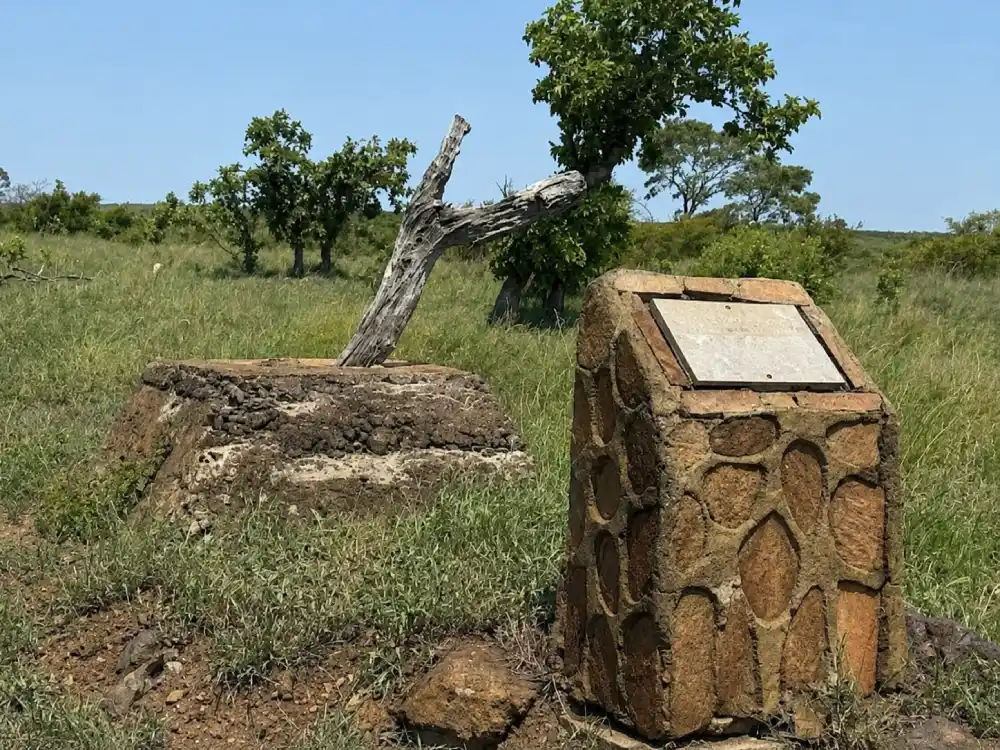
The Stone plinth that marks the spot near Tshokwane
Most people drive past without knowing what it marks.
The road is called Lindanda. It’s a Swazi name given to a man named Harry Wolhuter who was the first game ranger in the Kruger National Park.
During the Anglo-Boer War, Harry rode with Steinaecker’s Horse. They were a proper motley crew. A rough, mixed band of Shangaans, Swazis and white settlers, sent to guard the wild eastern frontier along the Mozambique border. Their job was to choke off arms supplies to the Boers from Delagoa Bay.
The unit lived on the knowledge of its Shangaan and Swazi scouts. They could find water, interpret an animal’s track, and knew the safe river crossing points.
The area was brutal, though. Malaria killed more than half the men in most regiments posted there, and lions were known to have taken soldiers from beside the campfire.
This was Harry’s crew.
When the war ended, Major James Stevenson-Hamilton offered Harry a job as a ranger.
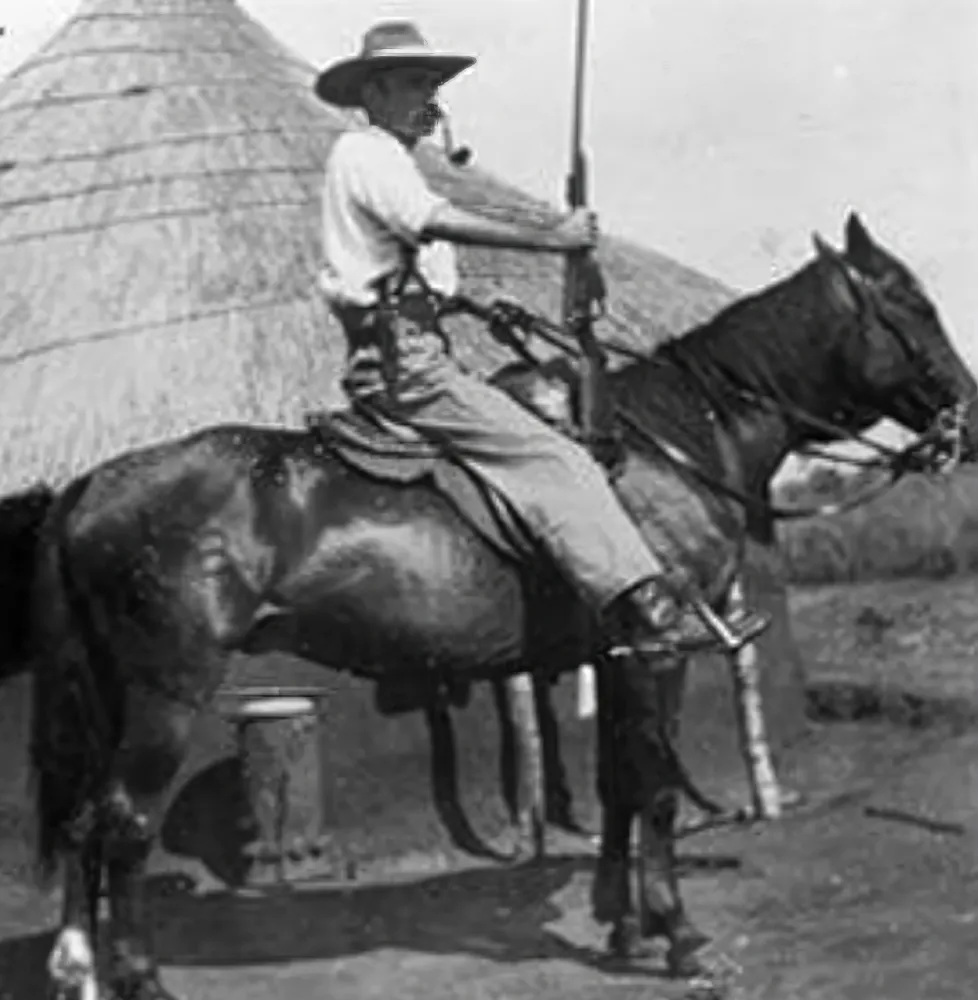
Harry on his horse © SANParks archives
In August 1902 he was riding home from a patrol on the Olifants River. He had three people with him, Shangaan men who probably knew the area better than he did, a string of donkeys carrying his kit, and three dogs.
The plan was to sleep near a waterhole along the way. When they got there, the pool was dry. It was late in the afternoon and the next water was about twelve miles (19km) on. So Harry rode ahead alone, with his dog, Bull, trotting behind him.
The men and the donkeys followed.
It got dark. But Harry did not worry about that. He had ridden that path many times at night during the war. He had never seen lions in those parts, so he did not think about them at all.
Then two figures emerged from the long grass alongside him. He thought they were reedbuck, and expected them to bolt across the path and vanish. Instead, they came at him.
By the time they were close enough to see, he knew what they were. Two lions.
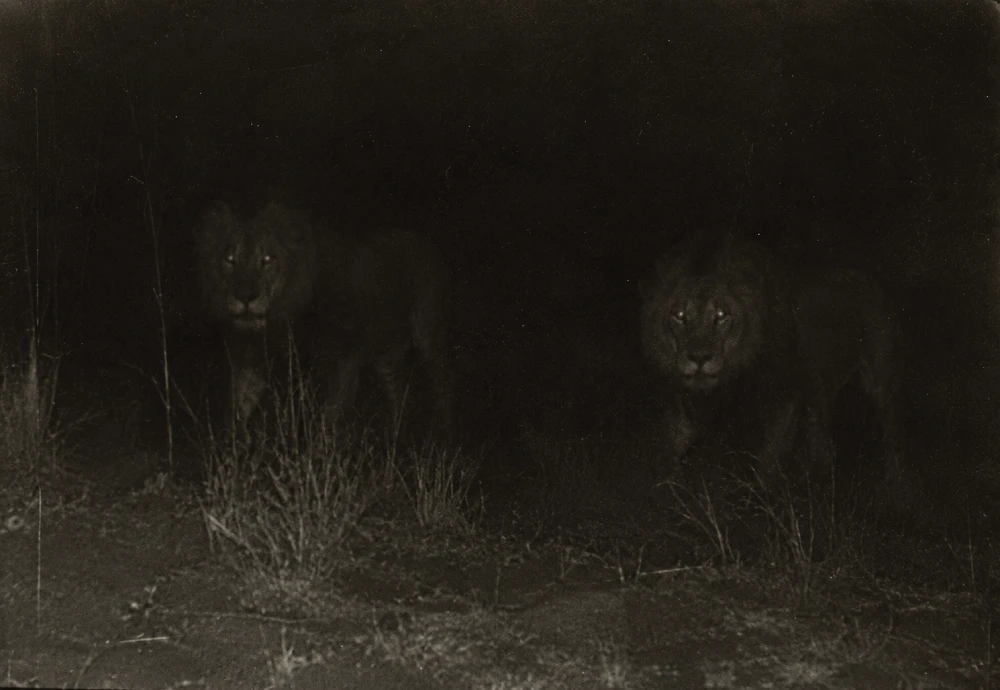
Lions in the dark
There was no time to use his rifle. So he turned the horse and drove in his spurs. But he was too slow. One lion leapt on the horse’s hindquarters, and it bucked so violently that both Harry and the lion was thrown to the ground – almost on top of the other lion.
That fall, strange as it sounds, probably saved him. The lion had no time to choose. It simply seized what landed in front of it.
The lion grabbed him by the right shoulder instead of the head, and began to drag him off into the bush. Harry knew exactly what it meant. Years later he wrote: had the lion taken his head, “this book would assuredly never have been written.”
The lion dragged him fifty five meters on his back toward the Metsi-Metsi riverbed. It’s teeth sunk deep into his shoulder. His spurs cut furrows in the ground as he was dragged along. Every time the spurs caught, the lion jerked its head impatiently, which drove fresh pain.
But the worst part was not the pain. It was the question in his mind of whether the lion would kill him first, or simply start eating him alive.
In his book, Memories of a Game Ranger, Harry writes, “Of course, in those first few moments I was convinced that it was all over with for me and that I had reached the end of my earthly career.”
Harry’s book called Memories of a Game Ranger
Then he remembered his knife.
It was usually on his belt, on the right side. But it sat loosely in its sheath, and it had fallen out before, so Harry wasn’t sure it was still there. With the lion holding his right shoulder, he worked his left hand all the way around his back to reach it. It took time.
Incredibly, the knife was still there.
Pressing himself into the mane for leverage, Harry drove the knife in behind the lion’s shoulder. Into the heart. Blood streamed all over him.
The lion vocalised loudly, let go and slunk off into the dark.
Harry got to his feet. His rifle was lost somewhere in the grass. So he stood there in the dark and shouted every name he could think of at the lion as it went. In his own words, “I don’t think that bush had ever heard such names before.”
Then he remembered the other lion, which would no doubt come back. He quickly found a tree with a low fork and, with only one good arm, hauled himself up to a branch about four meters off the ground.
By this point he was cold, soaked in blood, and starting to feel faint.
He took off his belt and strapped himself to the tree so he would not fall if he passed out. Not long after, he heard what he took to be the lion dying in the grass nearby.
Then the second lion followed his blood trail to the foot of the tree and reared up to climb. The tree was an easy one to climb. That was the only reason Harry had got up it, and now it might be the reason he came down.
Then Bull arrived.
His faithful dog had started barking incessantly at the lion. Bull, apparently a big, rough ‘Boer dog’, rushed at the lion and managed to hold it off, again and again.
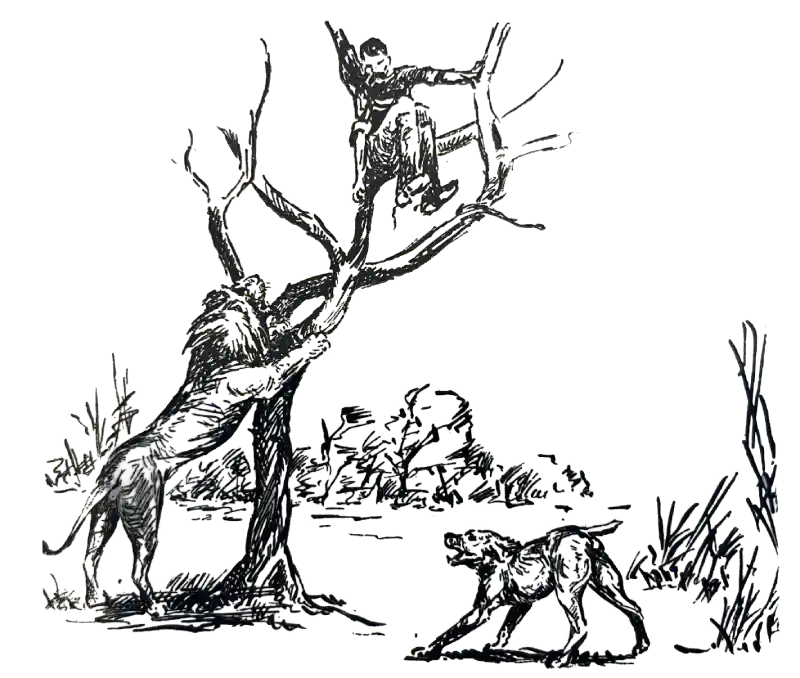
Harry treed by 2nd lion, sketch by C.T. Astley-Maberly
Sometime later his men came up the path, totally unaware of what had just occurred.
The first man was carrying a hamper of tin dishes on his head. Harry called out to warn him. Instantly, a great clanging of dishes could be heard as he dropped his load and scrambled up a small tree of his own.
Despite Harry’s warnings he flatly refused to come down and look for a bigger one.
When the rest of the crew and donkeys finally arrived, the men fired a few shots, made a fire, and helped Harry down.
The group walked seven kilometres that night, Harry bleeding, to reach an old Steinaecker-era outpost, where there was no water either.
His men went out into the dark to look for water. They came back with a canvas nosebag half full of muddy liquid. To find water at night, in the late dry winter, by reading animal trails, is not luck.
Harry had no choice. He knelt down and drank the mud.
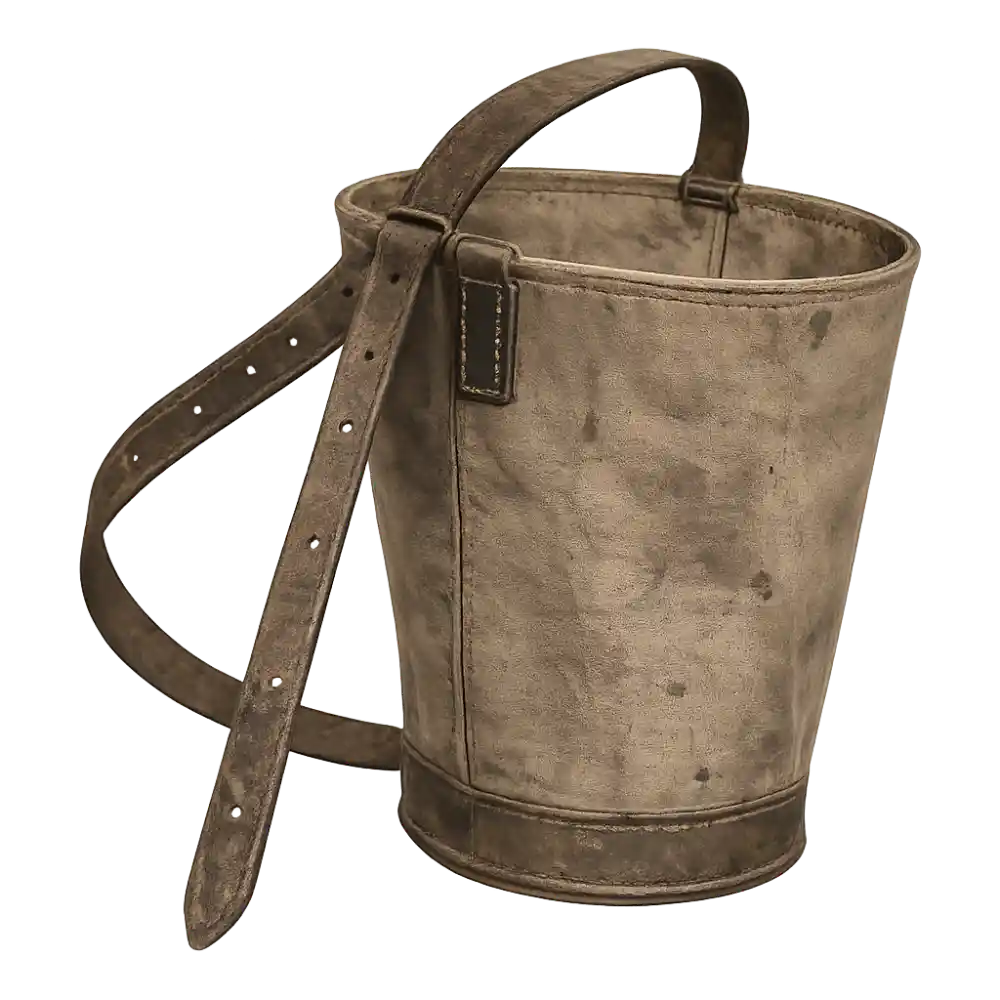
A Nosebag is a canvas feed bag strapped over an animal’s muzzle
The next morning his men went back to be sure of the lion. They followed its blood trail through the grass until they found it dead. They found his horse too. Somehow it had survived.
His wounds got no proper dressing for days. He could not ride the horse, so the men made a stretcher from a blanket, and they carried him in relays for four days, over a distance of some eighty kilometres, to Komatipoort.
Harry’s wounds turned septic, so badly that he could smell his own rotting flesh.
The doctor in Komatipoort patched him up but had no morphine for the pain. From there a friend took him by train to the hospital at Barberton, a jolting 6-hour journey lying on a hard bench.
At one point the doctors seemed to give up hope.
Luckily, a defiant and resourceful nurse told Harry that if he promised not to say a word to the doctor, she would see what she could do. She took a surgical probe and worked it right up into the shoulder joint, opening a channel to let the trapped fluid drain out.
The pressure eased at once.
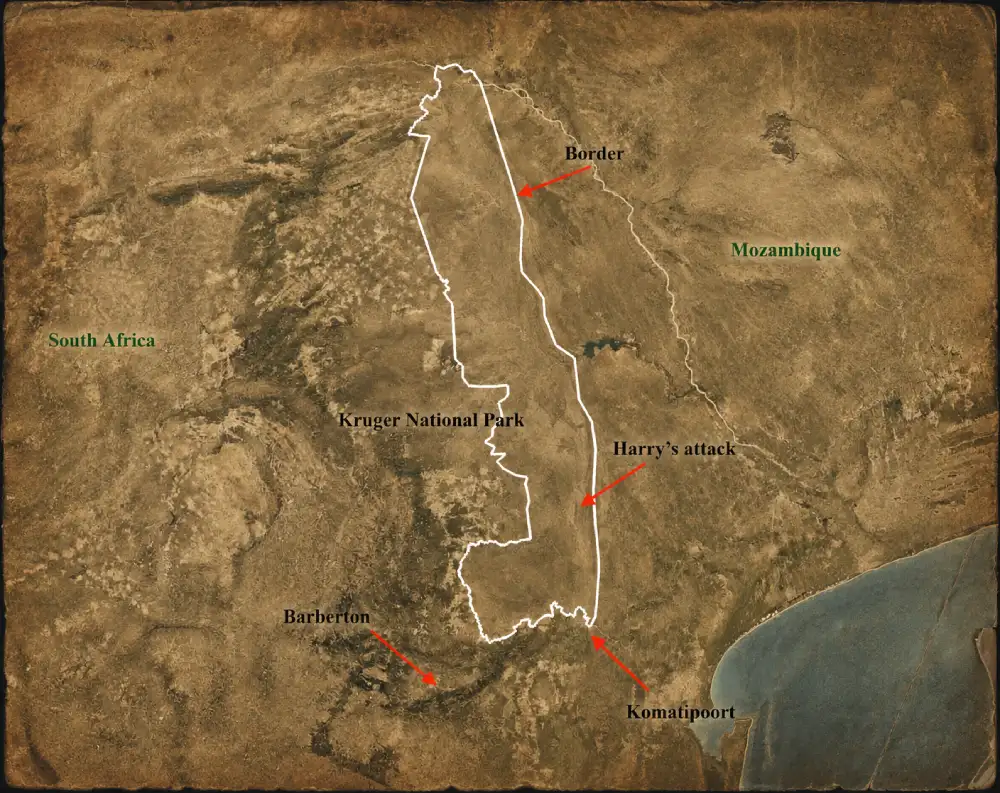
Map of Kruger National Park
It’s worth noting that there were no antibiotics in 1902. That Harry survived the infection at all is remarkable, though it cost him the full use of his right arm for the rest of his life.
When his men opened up the lion that had attacked him, they found its stomach empty. It had not eaten for days. It was hungry, and Harry was what came along. He even joked, saying it would not have been long before that lion made a meal of him, “in spite of the fact that I was pretty skinny and hard at the time.”
Years before the lion, Harry had ridden through this wild country where he had lost comrades to fever, crocodiles and lions. So its unsurprising that he never saw his own encounter with the lion as some great injustice.
Harry was tough, but plenty of men are tough. What set him apart was his composure.
The knife was a cheap butcher’s knife with a six-inch (15cm) blade. Harry had spotted it cutting cheese in a shop in Komatipoort. He reckoned it was far too good to be wasted on cheese, so he surreptitiously swapped it for his own. Years later he admitted the theft, on the grounds that a fair exchange is no robbery.
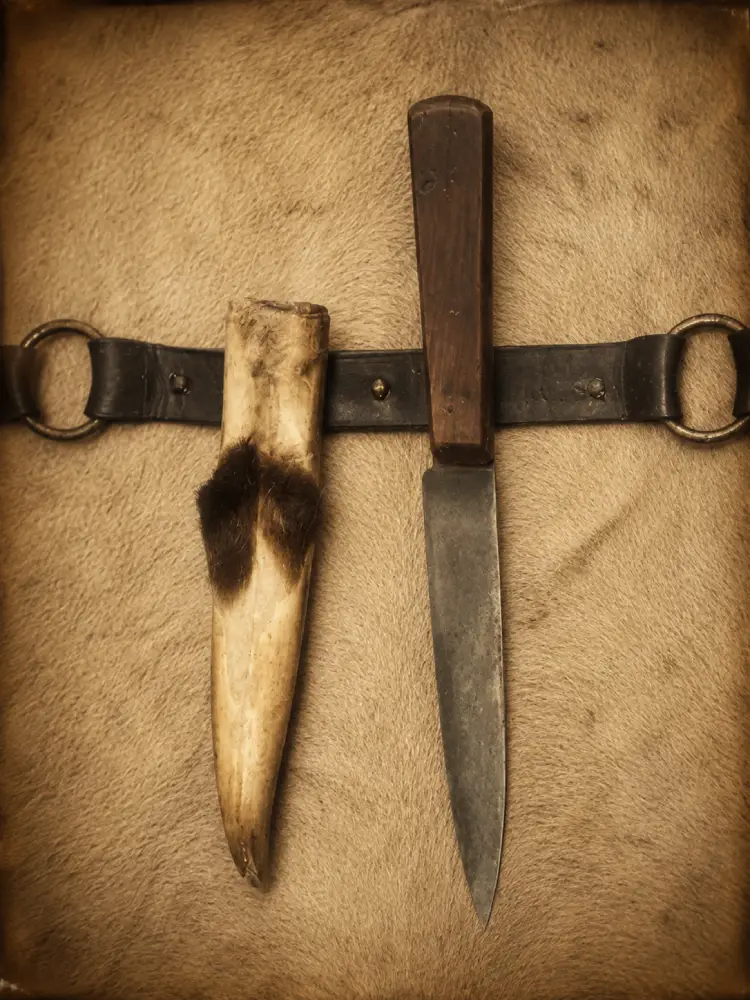
Harry’s knife.
Harry’s knife was made by Thomas Williams of Smithfield in London. It is on display today in the Stevenson-Hamilton library at Skukuza, along with the lion’s skin. It is so well known today that several knife-makers still forge replicas.
And the place where it happened is right there on the Lindanda road, a short way from where we sleep under the Apple-leaf trees at Tshokwane River Camp.
Harry killed the lion in one desperate moment, with a butcher’s knife. But he did not save his own life. The men who came up the path did that.
They drove off the second lion. They found water in the dark when there was none. They carried him for days. And they went back and tracked the lion by its blood until they found it dead, so that Harry would know for certain.
What saved Harry was his own courage and presence of mind. But ultimately it was the loyalty, bushcraft and selfless actions of his local Shangaan and Swazi companions who carried him home alive.
In the end this is a story about two things: a wild land, and the deep care of the people of the South African lowveld.
Both are still here.
We would love you to come see for yourself.
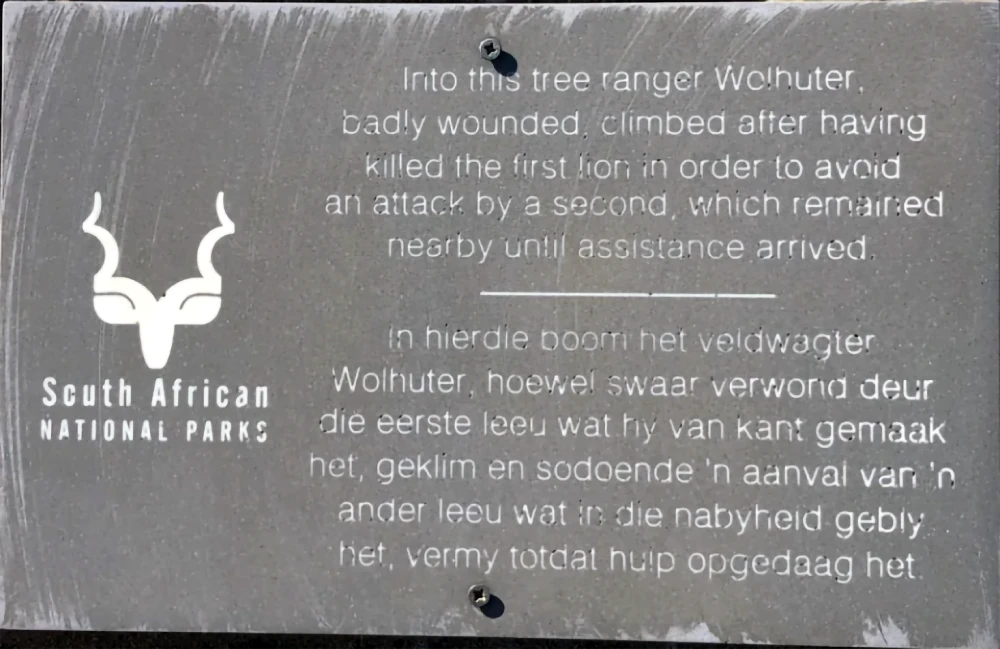
Harry Wolhuter plaque at Lindanda
Thank you to Harry Wolhuter, the Wolhuter family, SANParks archives, The Wild Life Protection Society of South Africa and Charles T. Astley-Maberly for the story, photos, and imagery.
Latest from our Blog
Why Good People Hold Back
They Wanted to Remember
What Saved Harry Wolhuter