
How to build trust with someone nothing like you
For about six months, Renias kept asking me to visit his home in a village called Dixie. I kept finding reasons not to go. I grew up on a farm in apartheid South Africa, and I had been taught to avoid places like Ren’s village. I am not proud of that, but it’s the truth.
One day he mentioned, almost in passing, that his family would be home and wished I could meet them. I felt ashamed of myself for dodging him. So I drove out in my old VW Golf, and down roads that had more potholes than tar.
When I arrived, Renias took me straight to his bedroom. “This is where you are sleeping,” he said. “You are my VIP guest.” He had given me his own bed. He told me later that he’d saved for six years to buy it.

After supper we sat around the fire and talked late into the night. I asked questions and I listened. I learned more about Renias and his family in those three days than I had in the eighteen months we had worked together.
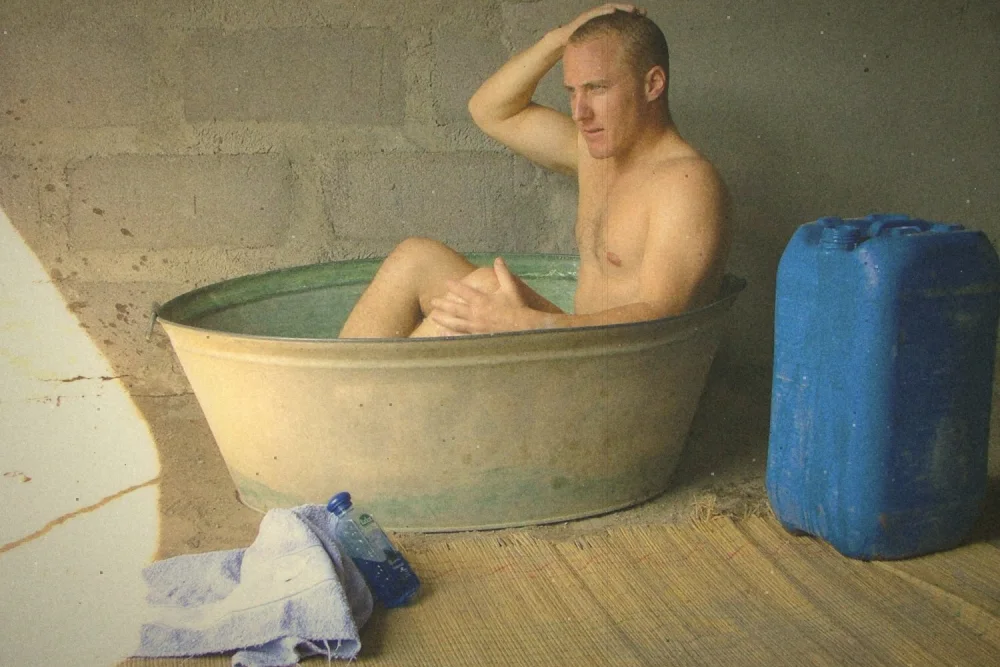
The next morning his children Angela (9) and Nature (6) carried a heavy zinc bath into my room, full of steaming hot water. They had collected wood in the bush, made a fire, and heated about twenty kettles by hand. I sat in that bath and thought about the effort it had taken to get it to me.
That weekend held the three things Renias and I have come to believe hold any relationship together.
They are incredibly simple, but are surprisingly difficult to do.
The first is acceptance.
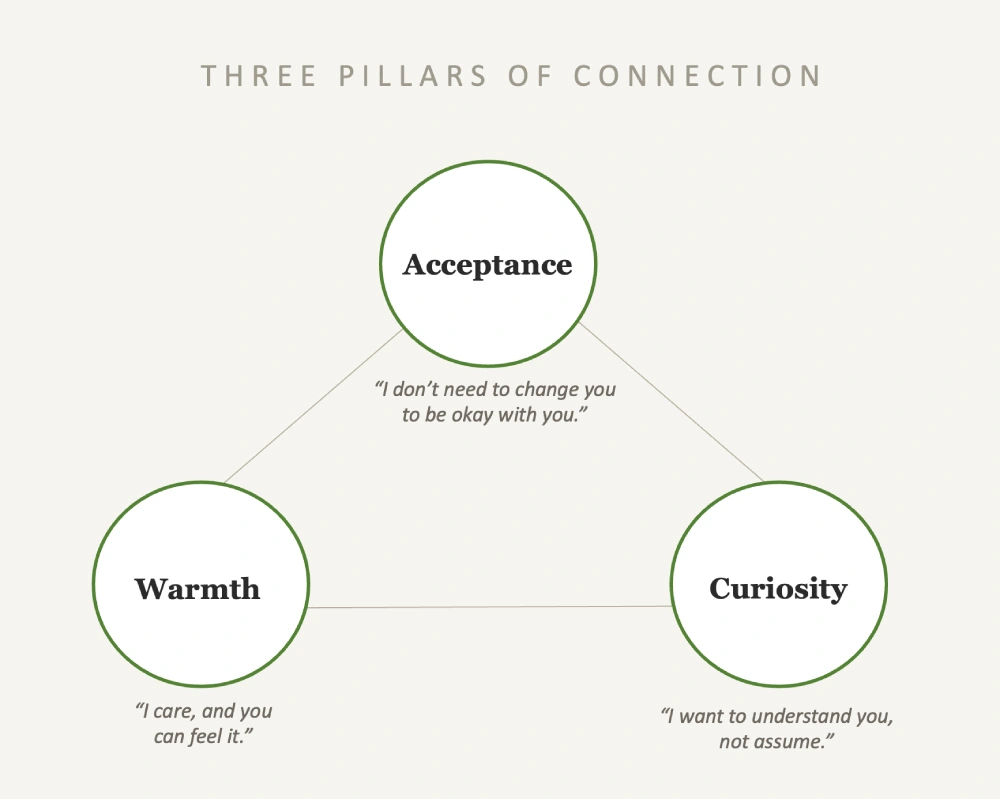
Acceptance says, “I don’t need to change you to be okay with you.” For years I had not let myself see how Renias actually lived. And he had labelled me another rich young white man passing through. Going to Dixie meant seeing his life as it actually was, not as I thought it should be. When people feel you accept them, they open up. To the contrary, when they feel judged, they hold back and give you a polite, false version of themselves.
The second is curiosity.
Curiosity says, “I want to understand you, not assume.” By the time I sat at that fire, I could follow some of the Shangaan around me, because I had set out to learn Renias’s language. He was learning English in return. Neither of us had to. Trying to speak his language told Renias I was interested in his world. Most of us want to be heard. We want to share what matters to us. When you ask instead of assume, you access who they really are.
The third is warmth.
Warmth says, “I care, and you can feel it.” This is what makes the other two work. Renias gave up his own bed and said very little about it. He did not have to say much. When people sense that kind of warmth, they feel safe. And when they feel safe, they will trust you faster. Often the warmth is detected in subtle body language (which is hard to fake), and it lands long before any words are spoken.
Why does this matter at work?
Most teams today are full of people from different backgrounds, languages and histories. When people feel judged, they filter what they say. You end up leading a room full of careful, guarded people, and you never get their best thinking.
When people feel accepted, understood and cared for, they relax. They say what they actually think. They give you their real ideas, not the safe ones.
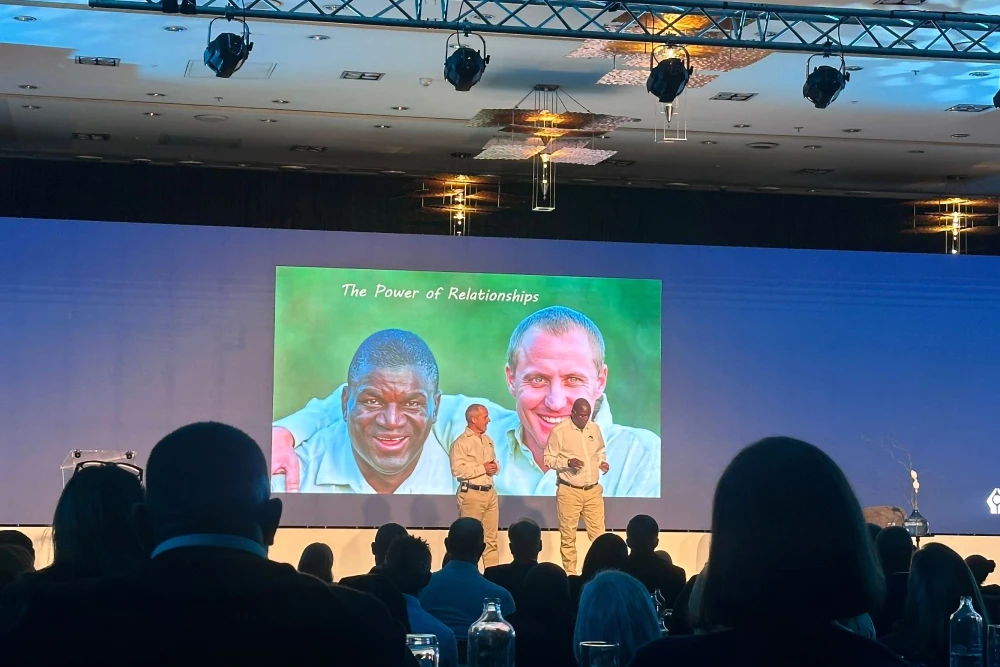
The Power of Relationships keynote
Renias and I built a talk around these three ideas and the stories behind them. We share it with companies that want stronger, more honest relationships inside their teams. Thirty years has taught us this. You may not have thirty years, but you can start today. Accept the person in front of you. Stay curious about them. Be warm. It won’t fix everything. But over time, it changes everything.
Latest from our Blog
Why Good People Hold Back
They Wanted to Remember

What Saved Harry Wolhuter