
An ancient practice, almost lost
A small group of young Bushmen once came to me with an idea.
They didn’t say they wanted to learn persistence hunting. They said they wanted to remember.
For most of my life, the idea of a persistence hunt had lived only in my imagination.
Years earlier, I had watched a documentary called The Great Dance. It showed Bushmen hunters tracking animals across the Kalahari Desert using skills that seemed almost magical.
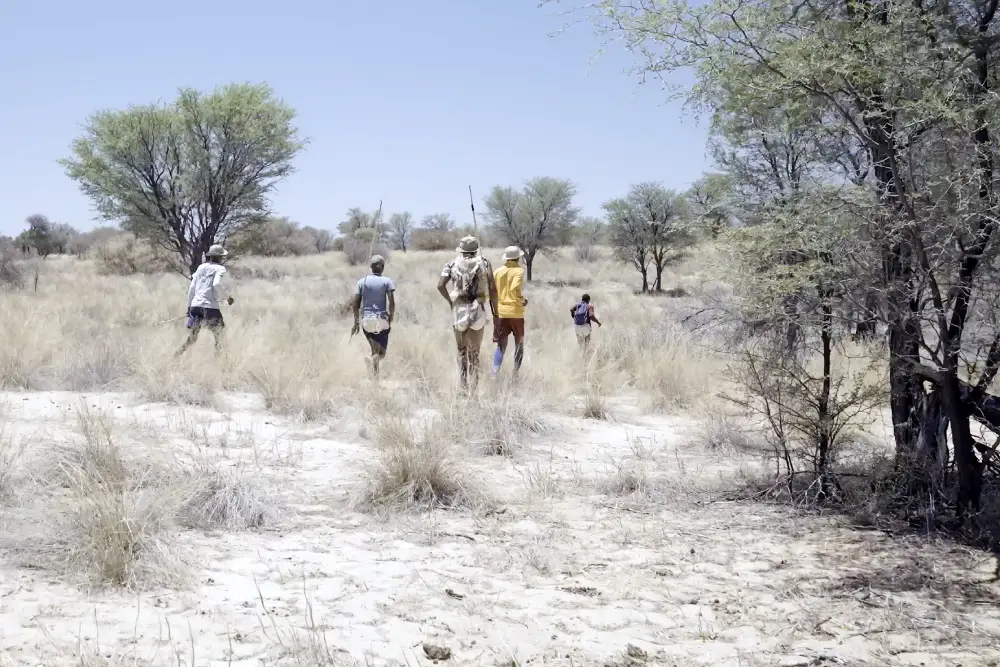
Instead of using a bow and arrow, traditional hunters follow an animal for hours at the hottest time of the day.
Incredible endurance and mental focus allow them to recognise and follow faint, almost invisible tracks in an ocean of other signs, across great distances. They do it at pace, and it’s one of the most demanding acts of applied intelligence our species has ever devised.
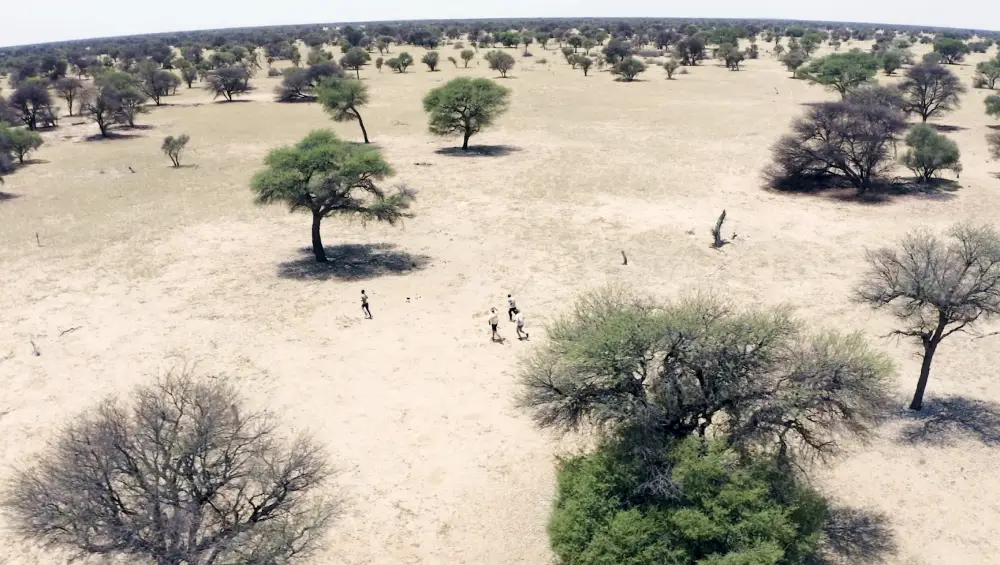
Anthropologists believe humans may have hunted this way for hundreds of thousands of years.
Whenever I had asked Bushmen trackers in the Kalahari about persistence hunting, they told me the same thing: the old hunters who knew how to do it were gone.
‘Gone’ was the word they used. In some ways, it’s a soft word for what happened.
The Bushmen were pushed off their hunting grounds, and their children were taught in other languages. Hunting was made illegal on most of their land. Their way of interacting with nature, built over thousands of years, was interrupted in a few generations.
So when these young men said they wanted to remember, I knew what they meant.
They didn’t need help with tracking – they were already good trackers.
What they needed was endurance.
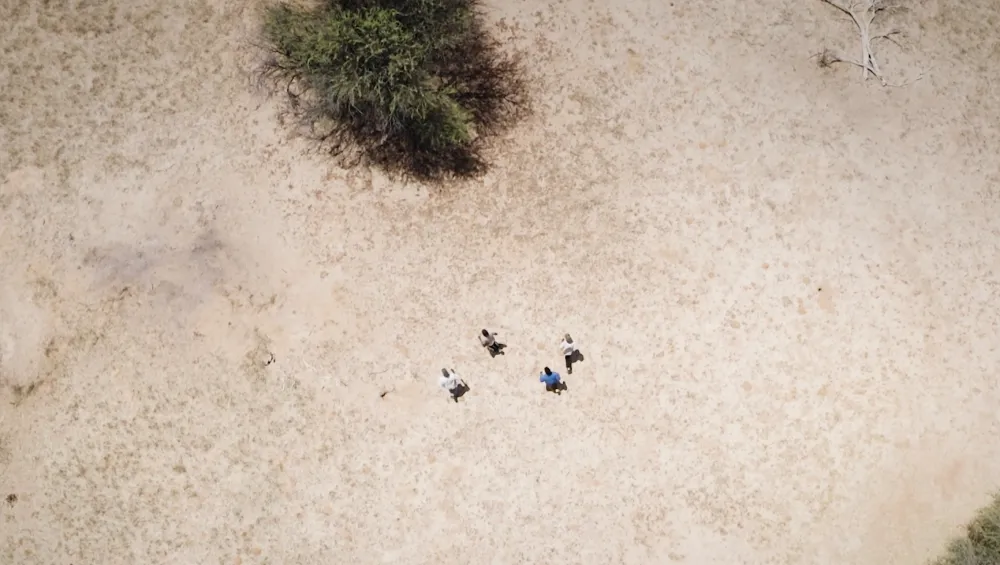
A professional marathon runner was enlisted to help with their preparation. Soon the Bushmen were running 20 to 30 kilometres a day in the hot sun.
Something about that sentence feels uncomfortable. A group of Bushmen needed a running coach to prepare for a hunt their grandfathers probably did readily.
Three or four generations, and it was almost all gone.
The atmosphere changed almost immediately. I cannot prove this, but I saw something wake up in them. They ran with the joy of people who had rediscovered something they had always loved.
Jon was the oldest in the group and the primary keeper of the old hunting culture. He was in his late sixties, without a shred of fat on him. Beautifully lean, I could see his life had been hard.
Jon had taught the youngsters that the ritual mattered as much as the result.
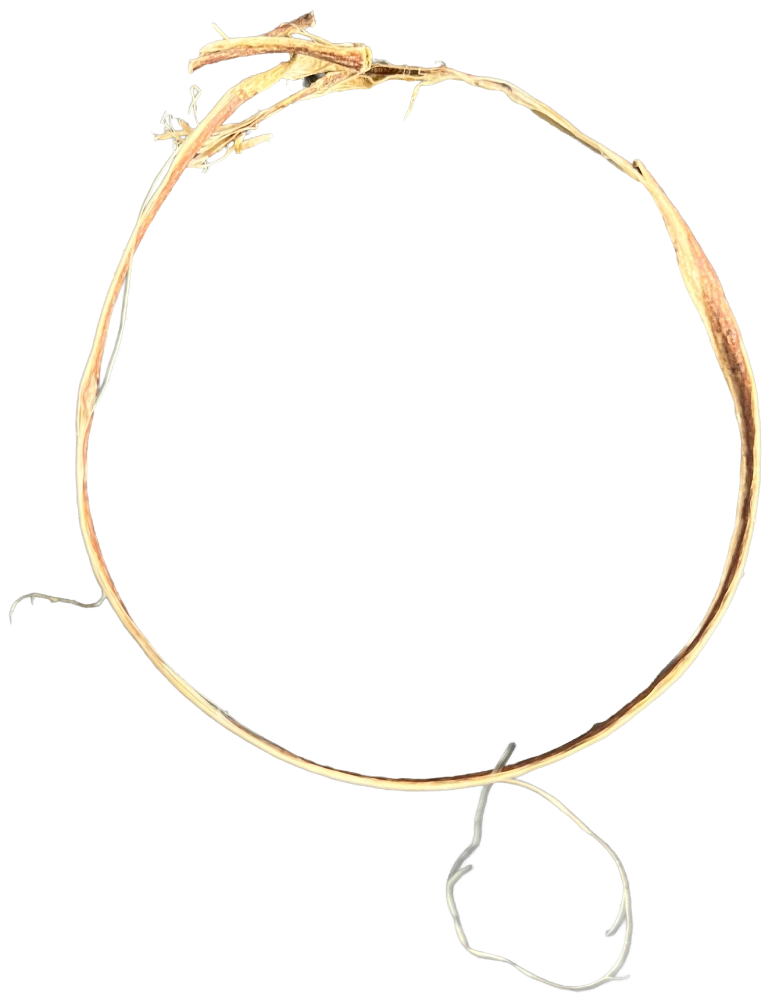
The night before the hunt, we sat around a fire. Jon braided a bangle from grass and slipped it onto my wrist. This was his way of saying, ‘You are part of this now.’
When the hunt eventually began, the pace surprised me. The Bushmen were hardly running at all. They were ambling across the dunes, chatting to one another as they casually followed the tracks of a herd of kudu antelope.
At first I thought we were wasting time.
But slowly I realised they were waiting for something specific: the moment when one animal separated from the herd. Then Jon pointed at a track, showing one kudu had moved away from the herd.
That is when everything changed.
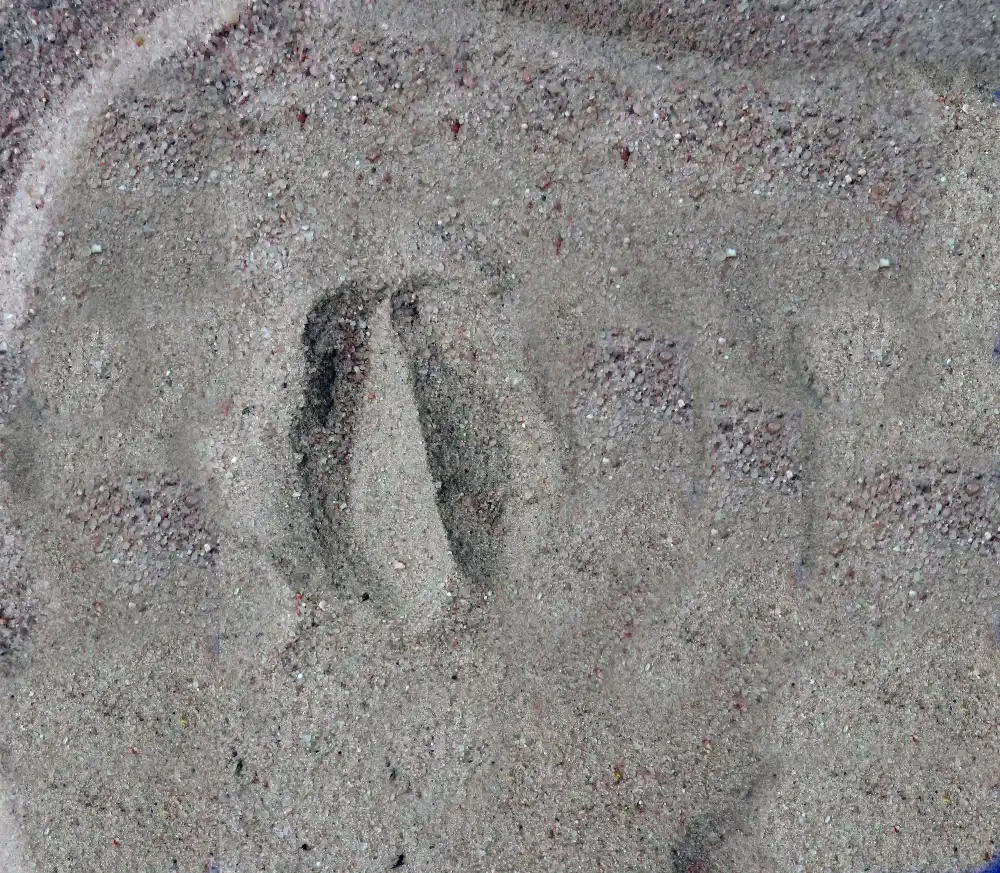
As the heat intensified, we began to run.
The Bushmen moved with a smooth, relaxed stride that seemed almost effortless. Running lightly across the sand while reading the kudu’s trail at the same time.
At some point we came to a fallen log, and without thinking, I hopped over it. Two of the Bushmen stopped me and gestured that I should go around it next time.
I thought they were joking. Going around meant extra effort.
They were not joking. You never jump a log during a hunt. If you do, you give power to the kudu. Another man said something about respect.
I did not understand it then and I still do not fully understand it now. But I could see that this was a relationship, and they were in conversation with the animal.
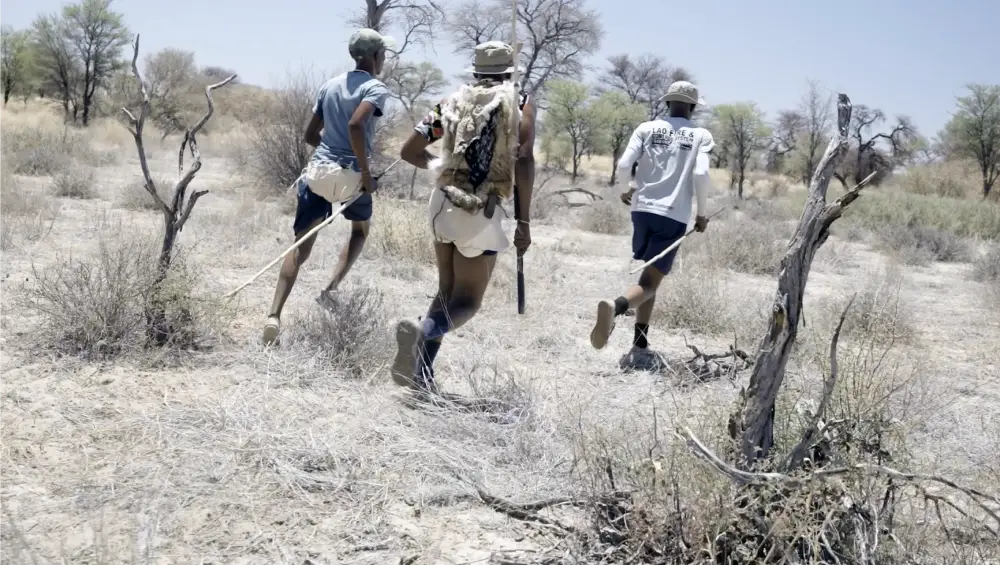
As the pace increased, Jon’s legs began to give in.
He had to stop.
I saw him watch the younger men accelerate away from him.
The man who remembered the most was left behind by his own body. His desire was still there, but the distance between what he knew and what he could now do had become too great.
Soon the pace increased further.
The men in front began to accelerate. Their rhythm grew faster and faster, pushing me close to my limit.
A couple of hours in, the kudu’s trail began to zigzag.
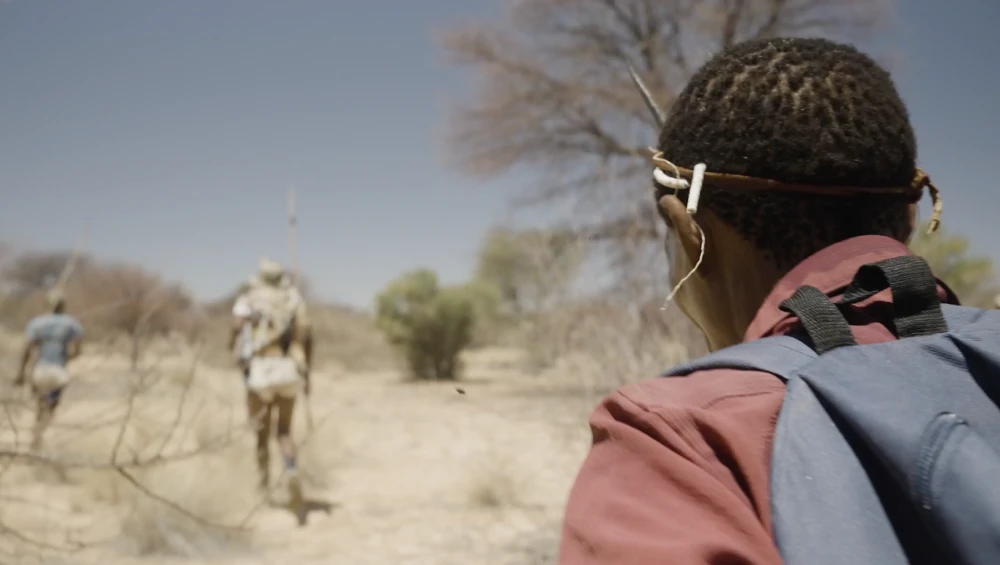
The sand was deep and loose. Every few steps my feet collapsed into unseen ground squirrel burrows, utterly breaking my momentum.
Then the blister on my foot burst.
The Bushmen kept moving steadily ahead. The hunt was certainly not going to wait for anyone. I stopped, strapped the toe, and stood up in less than two minutes, expecting to see nothing but empty woodland.
Instead, the kudu was running directly toward me.
Behind it – maybe fifty metres away – was the lead Bushman hunter sprinting after it. His face was totally calm.
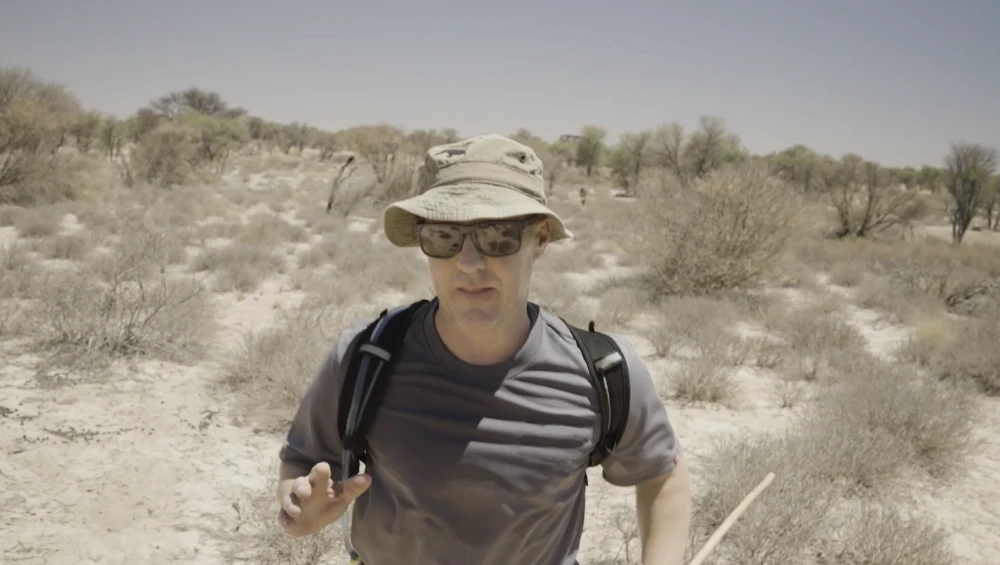
The kudu saw me and swerved. I turned and began running again beside the lead hunter.
Forty minutes later, under the relentless sun, the kudu finally ran out of power. It slowed down and collapsed beneath a camel thorn tree.
The trackers approached it quietly and respectfully. One of them spoke softly in his language before ending the hunt quickly.
We knelt beside the animal and each man took a handful of sand, letting it fall slowly over the kudu’s body. A ceremonial gesture to say thank you, and to ask the spirit to return to the earth from which it came.
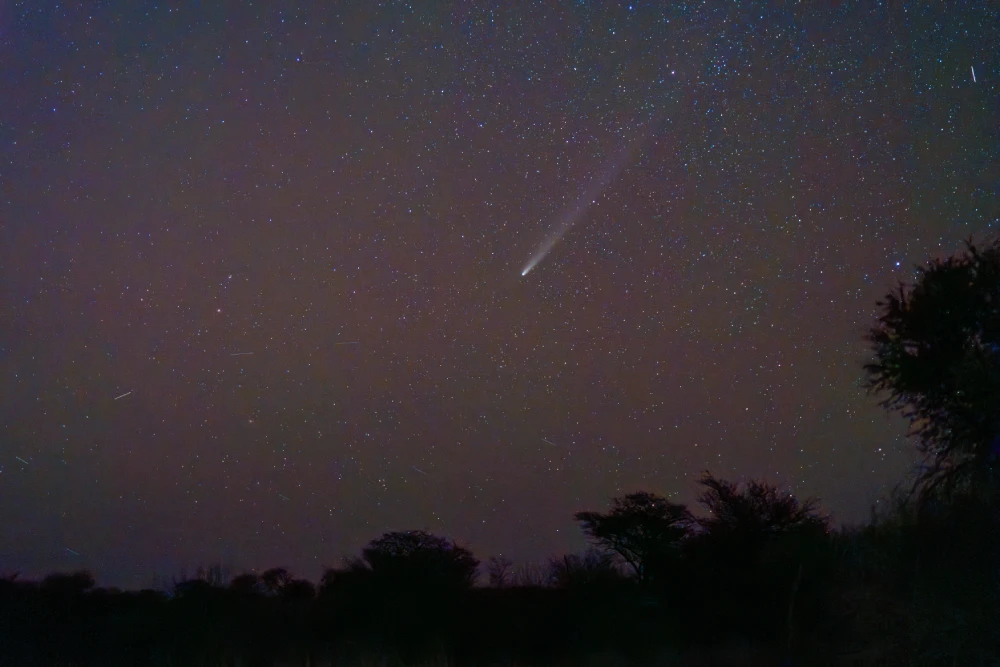
That night we sat around a fire beneath the enormous Kalahari sky. My friend James photographed a comet streaking across the night sky. One of the men said it was the spirit of the kudu, travelling across the heavens.
Nobody said much.
I still have the bangle. It lives in an envelope in a drawer in my office, three years dry now, and it comes apart a little more each time I look at it. It was never going to last.
Jon knew that when he tied it.
The young men understand this too. That is why they want to remember.
Alex van den Heever

Thank you, James Tyrrell, for the pics
Note: I’ve used the term “Bushmen” throughout this piece because it is the term the people I worked with asked me to use when referring to them.
Latest from our Blog
Why Good People Hold Back
They Wanted to Remember

What Saved Harry Wolhuter